
BYD was founded in 1995 in Shenzhen, China, by an engineer named Wang Chuanfu, who set the company up as a maker of rechargeable batteries for mobile phones and other electronics. The company was founded on February 10, 1995 and is headquartered in Shenzhen, China. The name BYD stands for “Build Your Dreams,” and for its first several years it had nothing to do with cars at all. That changed in 2003, when BYD Auto was established as a subsidiary of BYD Company following the acquisition and restructuring of Xi’an Qinchuan Automobile, giving the company its first real foothold in vehicle manufacturing.

BYD Overview
Two years later, the first car designed by BYD, the petrol engined F3, began production in 2005, built at a plant in Changsha. The company spent its first decade and a half as a carmaker finding its footing. For eleven years, from 2009 to 2020, BYD’s automobile business stagnated, with annual sales hovering between 400,000 and 500,000 vehicles, while other local manufacturers experienced growth. The turning point came with the boom in China’s new energy vehicle market. From 2020, BYD’s sales grew significantly, driven in part by the rapid rise in new energy vehicle sales in China, and by 2022 the company had stopped building petrol only cars entirely, committing fully to electric and plug in hybrid models. Wikipedia + 2
That bet paid off in a big way. BYD surpassed Tesla in total electrified vehicle sales in 2022 and became the world’s largest seller of battery electric vehicles in 2025, while also overtaking Volkswagen to become the top selling car brand in China. On November 18, 2024, BYD became the world’s first automaker to produce 10 million new energy vehicles, and by late 2025 that figure was closing in on 15 million. In 2025, BYD sold over 4.3 million plug in vehicles globally, more than Tesla and several rival groups combined. Britannica + 3
The company is still headquartered in Shenzhen, and employs roughly 703,000 workers worldwide. Within China, BYD runs nine car production bases, with its Xi’an plant standing as the largest, capable of building around 1.5 million vehicles a year on its own. Other significant sites include Changsha and Zhengzhou, each producing several hundred thousand to close to a million vehicles annually, and Hefei, alongside the original Shenzhen plants and factories in Shanghai and Tianjin. Britannica + 2
Outside China, BYD has been building out a genuinely global footprint. Its Thailand plant, which opened in 2024, is the company’s first wholly owned manufacturing facility outside China. BYD is also setting up production lines in Cambodia, Indonesia and Thailand, and plans to open passenger vehicle plants in Hungary and Turkey, alongside an expanding Brazilian operation, as the company works to build closer to the markets it sells into and sidestep import tariffs along the way. WikipediaWikipedia
BYD’s passenger cars are sold under two main families. The Dynasty series, started by the Qin in 2012, aims at the traditional mass market with designs inspired by Chinese history, while the Ocean series, started by the Dolphin in 2021, targets younger buyers with more modern styling. The Dynasty line includes the Qin, Han, Tang, Song and Yuan, while the Ocean line includes the Dolphin, Seal, Sealion and Seagull. Beyond the core BYD brand, the company also owns the premium marque Denza, along with Fangchengbao and Yangwang, with the latter building ultra high end performance cars and SUVs. WikipediaWikipedia
From a small battery workshop in Shenzhen thirty years ago to one of the largest car manufacturers on the planet, BYD’s growth is one of the more remarkable stories in the modern auto industry, and there’s little sign of it slowing down.
Models

BYD Atto 2
View model →

BYD Atto 3
View model →

BYD Dolphin
View model →

BYD Dolphin G
View model →

BYD Dolphin Surf
View model →

BYD Han
View model →

BYD Han L
View model →

BYD Seal
View model →

BYD Seal 08
View model →
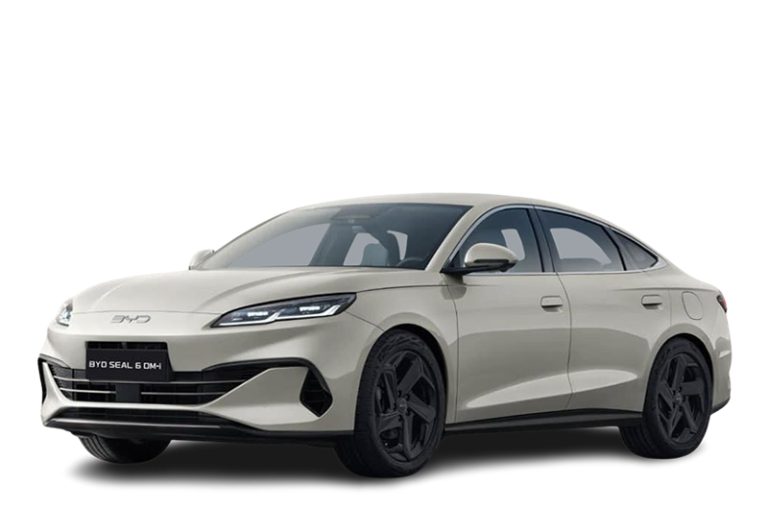
BYD Seal 6 DM-i
View model →

BYD Seal U
View model →

BYD Sealion 08
View model →

BYD Sealion 5
View model →

BYD Sealion 7
View model →

BYD Shark
View model →

BYD Ti7
View model →